
This article was originally published in the September issue of Illinois Field & Bean. View the article here.
Harvest has always been a crowd favorite. Whether it’s the humid heat of summer being replaced by crisp, autumn air, or the end of year holidays peeking out on the horizon, harvest tends to bring with it a sense of happy endings. But as any farmer knows, the work doesn’t stop even after the crop is out of the field.... Read More →
ILSOYADVISOR POST
Agronomics: Crop Tour: Soybean Pods, Corn Yields up over 15%
August 21, 2014
CORALVILLE, Iowa (DTN) -- Scouts saw a very large corn yield average in Illinois, but expressed disappointment that the averages weren't the rumored 250 bushels per acre.
Scouts on the eastern leg of the Pro Farmer Midwest Crop Tour reported an average yield of 196.96 bushels per acre, up 15.5% from 170.5 bpa last year. The three-year average, which includes 2012, is 149.4 bpa.
"I think Illinois is good, perhaps a little better than I thought it was going to be," said tour scout Paul Neiffer. Scouts moved west from Bloomington, Ill., to Iowa City, Iowa, on Wednesday. "Iowa corn certainly needs a drink. The maturity is a little bit behind."
Scouts who travelled west from Bloomington and spent most of their time in Illinois' reputed garden area found an average yield in the 220 bpa range. The crop was consistently above average, but the mega-yield averages were few and far between. The central and west-southwest districts had average yields of 203.9 bpa and 204.9 bpa, respectively.
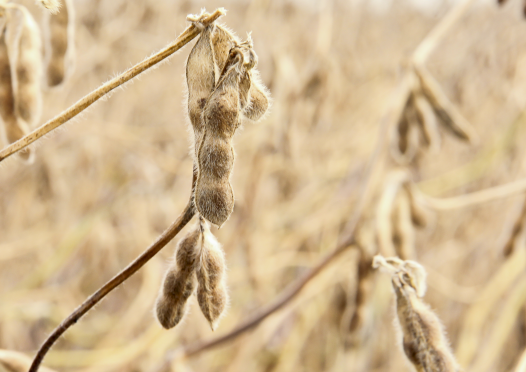
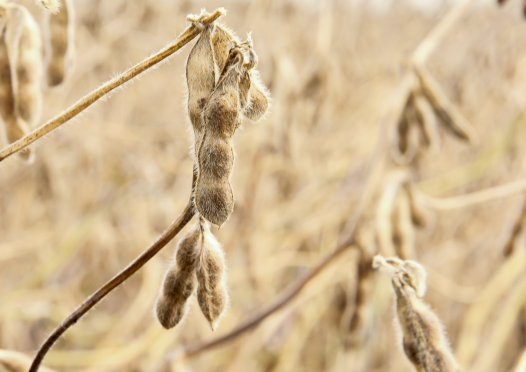
Soybean pod counts in a 3-foot-by-3-foot square came in 16.4% above last year at 1299 pods. The three-year average is 1085.
Scouts on the western leg of the tour released the yield data for three western Iowa counties. They traveled from Nebraska City, Neb., to Spencer, Iowa, on Wednesday. The full Iowa and Minnesota yields will be released Thursday evening.
The three Iowa districts reporting from the west averaged 179.48 bushels per acre with 151 samples and no irrigated acres.
Iowa's northwestern district had an average yield of 177.5 bpa. The west-central district averaged 180.1 bpa, while the southwest district came in at 180.9 bpa.
Soybean pod counts averaged 1160.83 over the three reporting districts. Scouts estimated the average pod count at 1091 in the northwest, 1225 in west-central area and 1166 in the southwest.
Kermit Allard, a farmer and first time scout from Cedar Falls, Iowa, said the corn yield averages were good. He expects the overall crop to be better than last year. Iowa's average last year was 171.9 bpa.
"The maturity ranged from dough to dent," he said. "We did see some blight starting to come in, but it won't be enough to cause problems before harvest. Some soybeans that had been replanted have a ways to go."
Martin Zaugg, a West Bend, Iowa, farmer attending the public event told DTN that scouts will find even more variable results Thursday. For example, he said the region around Rodman, Iowa, had 16 inches of rain in a 10-day period during June.
"Fifty percent of that corn is gone," said Zaugg. "Some of it was replanted twice." He personally replanted 750 acres and had 530 acres that still had water on it on July 30 that never did get replanted.
"I walked in my beans today and those that haven't drained will be lucky to make 28 bushel. Those that are well drained will be pushing 70 bushel," he said. He also indicated fields that didn't get hammered with weather don't seem to be missing an ear.
As scouts on the eastern leg moved into Iowa, dry conditions reared their heads. Scouts began seeing large cracks in the ground, corn stalks that were beginning to fire, secondary ears that didn't fill and a little bit of tipback.
The variability increased. Scouts on a route through Clinton and Cedar counties estimated their average yield from three stops at 178.6 bpa, but noted that one field had large patches with dropped ears and dead stalks. It will have quality issues after harvest and likely won't make the estimated yield.
The maturity is a little bit behind, especially on soybeans.
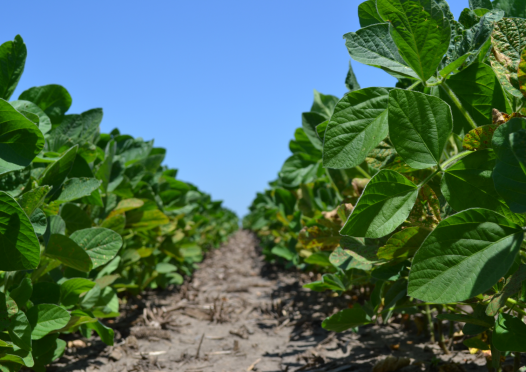
"They need water and time to finish them off," Neiffer said. "It really just, I don't want to call it poor, but it just looked sketchy in northeast Iowa. There was something telling them not to canopy. Maybe it was too cold. They're putting on pods, and the plants are healthy, so the potential still exists. But it needs water."
The potential is there, scouts said, but rain and temperatures in the mid-80s and mid-90s will be needed.
The corn crop, for the most part is made, scouts noted. It's beginning to dent and is almost fully dented in parts of Illinois. If weather gets hot in dry areas over the next week or two, it could cause some damage. But for the most part, corn is too far along.
Bug and disease pressure was light to nonexistent on the eastern leg. Some scouts reported seeing gray leaf spot and aphid, but very little of it was expected to affect yield.
In the west, scouts saw evidence of early water stress and loss of nitrogen as they neared their final destination of Spencer, Iowa. Fields were drier, too, with some cracks in the soil. Grasshoppers were abundant in soybean fields and a few soybean aphids were detected, but overall pest pressure appeared light. Some scouts reported Goss's wilt -- a disease that requires injury for onset.
|
PRO FARMER MIDWEST CROP TOUR RESULTS | ||||
|---|---|---|---|---|
|
----------- CORN ----------- | ||||
|
STATE |
2014 |
2013 |
3 YR AVG |
USDA |
|
SD |
152.71 |
161.75 |
125.70 |
139 |
|
OH |
182.10 |
171.60 |
146.13 |
177 |
|
NE |
163.70 |
154.93 |
146.81 |
173 |
|
IN |
185.00 |
167.36 |
141.24 |
179 |
|
IL |
196.96 |
170.48 |
149.36 |
188 |
|
IA |
|
171.94 |
157.94 |
185 |
|
MN |
|
181.09 |
171.07 |
168 |
|
----------- SOYBEANS ----------- | ||||
|
STATE |
2014 |
2013 |
3 YR AVG |
USDA |
|
SD |
1057.80 |
1016.68 |
902.76 |
40 |
|
OH |
1342.40 |
1283.60 |
1190.18 |
49 |
|
NE |
1103.30 |
1138.94 |
1106.62 |
52 |
|
IN |
1220.80 |
1185.14 |
1118.70 |
51 |
|
IL |
1299.00 |
1115.97 |
1085.35 |
54 |
|
IA |
|
927.30 |
1049.68 |
50 |
|
MN |
|
869.42 |
975.99 |
42 |
Click here to see an album of photos from the tour on Facebook.
Pam Smith, DTN Crops/Technology Editor, can be reached at Pamela.smith@dtn.com
Katie Micik, DTN Markets Editor, can be reached at Katie.micki@dtn.com
Used by Permission. Copyright 2014, Telvent DTN, LLC.
Comments
Add new comment